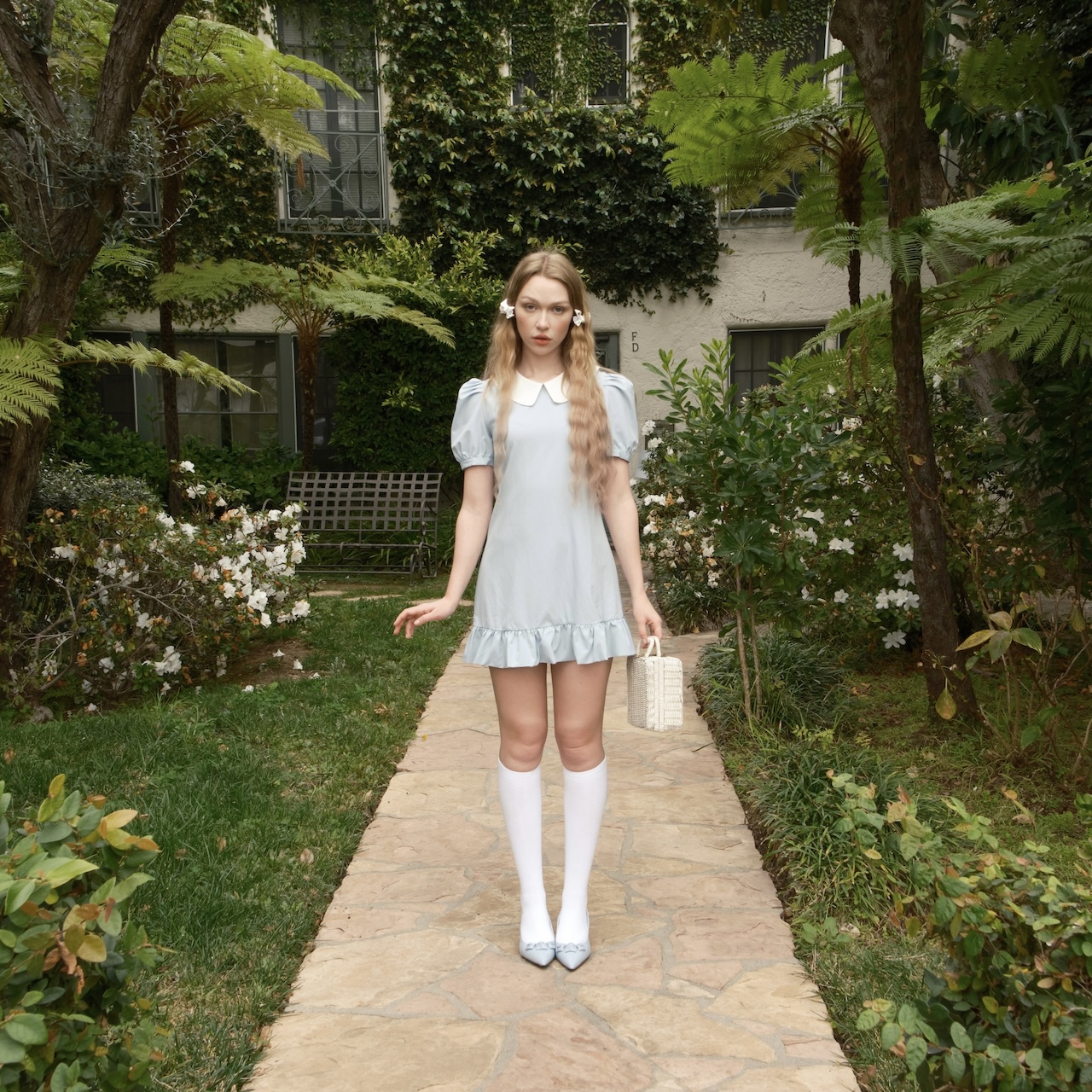
Emerging from the mist-covered woods of the Pacific Northwest with a voice both delicate and haunting, artist Mollie Elizabeth is rapidly becoming one of alternative pop’s most compelling young storytellers. At only twenty-one years old, the singer-songwriter has already carved out a distinct artistic universe — one built from vintage glamour, melancholic confession, eerie fairy-tale imagery, and emotionally raw songwriting.
Now, with the release of her latest single “Run Rabbit,” issued through Neon Gold Records and Futures Music, Mollie Elizabeth further deepens that world while introducing a darker emotional undercurrent beneath its whimsical exterior.
Produced by Josh Murty and already gaining viral momentum through TikTok before its official release, “Run Rabbit” arrives cloaked in dreamy melodies and cinematic atmosphere. Yet underneath the song’s ethereal surface lies a deeply personal meditation on trauma, survival, and the emotional residue left behind by an unstable childhood.

“Run Rabbit, while a very whimsical song, is actually a darker look into what it was like growing up in an unhealthy household,” Elizabeth explained in a statement accompanying the track’s release. “There’s an indescribable feeling that comes along with the baggage of an imperfect childhood.”
That balance between beauty and unease has quickly become a defining trait of Mollie Elizabeth’s work. Her songs often feel like forgotten storybooks discovered in dusty attics — romantic and dreamlike at first glance, but carrying quiet emotional devastation beneath their ornate surfaces.

Earlier releases such as “Dog Eat Dog,” “The Mirror,” and “The Disappearing Girl” established her fascination with vulnerability, identity, and emotional survival. “Dog Eat Dog,” in particular, examined the brutal realities hidden beneath human nature, while “The Disappearing Girl” expanded her cinematic songwriting through lush production and introspective lyricism. Together, the tracks helped establish a sonic aesthetic blending dream pop, chamber pop, and modern alternative songwriting with visual influences pulled from old-Hollywood glamour and gothic Americana.
Elizabeth’s debut EP Dirty Blonde further cemented her arrival as a singular creative voice. Co-produced by the artist herself alongside collaborators Dean Reid and GRAMMY-nominated songwriter Casey Smith — known for work with Olivia Rodrigo, Ashe, and Benson Boone — the project introduced listeners to what Mollie describes as “tiny worlds” contained within each melody.
Those tiny worlds appear to be resonating far beyond the Pacific Northwest. Snippets of “Run Rabbit” have already spread rapidly across social media platforms, particularly TikTok, where listeners have gravitated toward both the song’s hypnotic atmosphere and its emotional honesty. In an era where viral pop often prioritizes immediacy over depth, Mollie Elizabeth’s growing audience seems drawn precisely to the emotional complexity embedded inside her music.
Visually and sonically, her artistry feels equally inspired by contemporary alternative pop and forgotten Hollywood dreamscapes. Her imagery evokes faded film reels, midnight carnival lights, woodland isolation, and emotional fragility — all wrapped inside songs that remain remarkably accessible despite their darkness.
As “Run Rabbit” continues gaining momentum online, Mollie Elizabeth appears positioned at the forefront of a new generation of alternative pop artists unafraid to blur fantasy with confession. Rather than offering escapism alone, her music transforms difficult memories into ornate emotional landscapes listeners can wander through themselves.
And in doing so, she is proving that even the darkest childhood shadows can still bloom into something strangely beautiful.